
A guide to choosing your wedding signage
Wedding signage has really taken off over the last few years and with so many options now available, it is completely normal to feel a bit overwhelmed and wonder if you actually need any of it.
The truth is, weddings ran perfectly fine for hundreds of years without signs at every turn. This might sound quite cynical from someone who has literally built their business around wedding signage, but I started Sandy Lane Designs because I wanted to offer something more thoughtful than generic printed boards. I believe your signage should feel like a natural extension of you as a couple and your vision for the day. It should sit comfortably alongside your styling and timeline and highlight the personal touches that make your wedding yours. The kind of details that make guests smile, spark a memory, or get photographed again and again.
Your wedding should not feel like a conference venue with plastic PVC boards everywhere!
So here are my tips for striking the perfect balance and choosing signage that feels intentional and right for your day.
1. Start with your space
Begin with your venue and how your guests will move through it. The most beautiful sign in the world is wasted if no one sees it.
Think about where your guests will spend the most time and place signage there rather than tucked away in an entrance corner. Welcome signs are a common example. They often look lovely but are sometimes placed somewhere guests walk straight past without noticing.
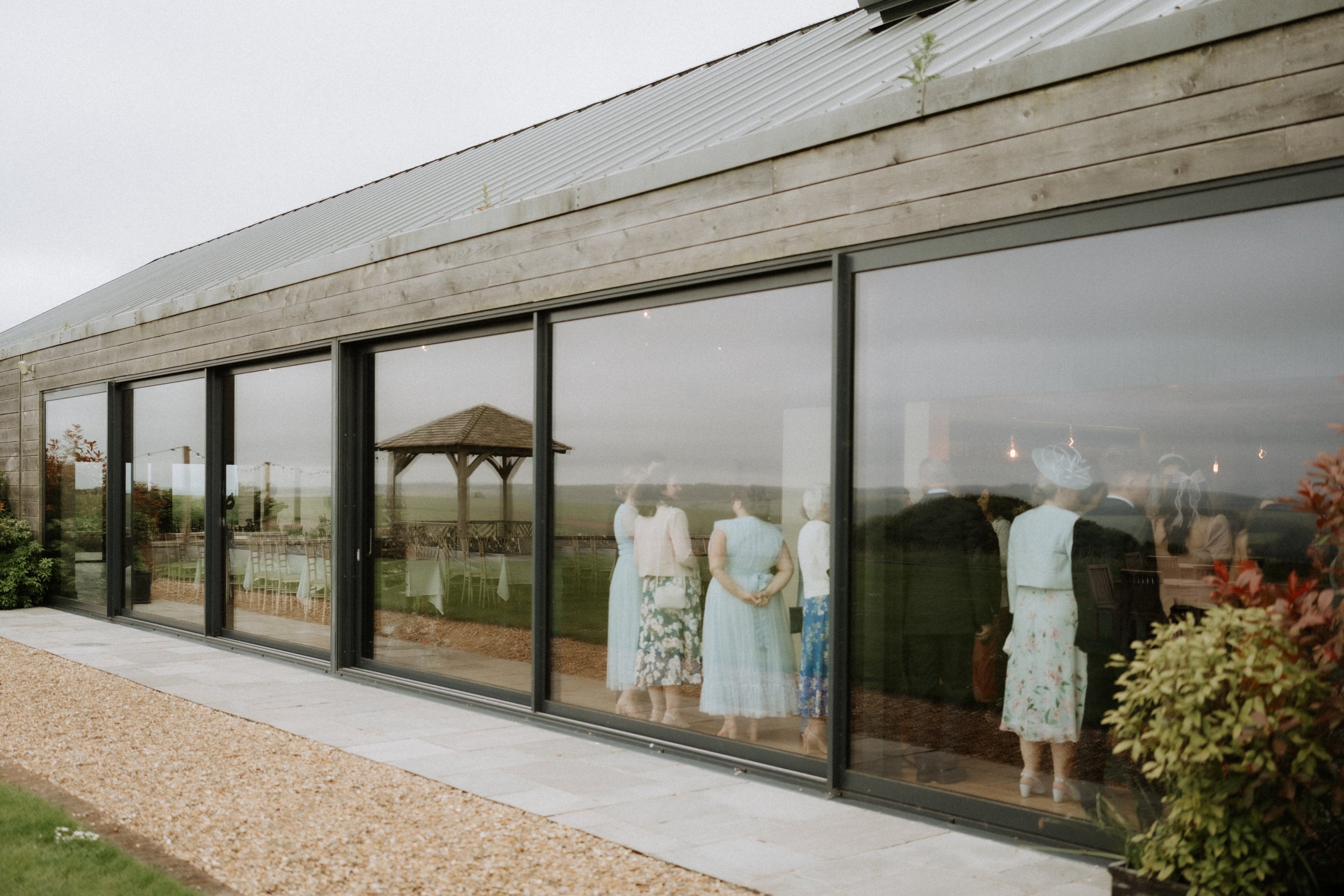
Consider how many different areas you are using across the day and how each sign will be displayed. Will you use an easel, hang it, lean it against a wall, or place it on a table? Check what your venue can provide and where signage will have the most impact.
Photo of Chalk Barn by @wychwoodweddings
2. Every sign should have a purpose
Each piece of signage should earn its place. That purpose might be practical, such as:
asking guests to keep phones away during the ceremony
guiding them to leave a message at your guestbook or audio guestbook
showing them where to sit
sharing the timeline for the day
But purpose is not only practical. A sign can also exist to be beautiful or meaningful. It might highlight a shared memory, a quote you both love, or a design detail that ties everything together visually.
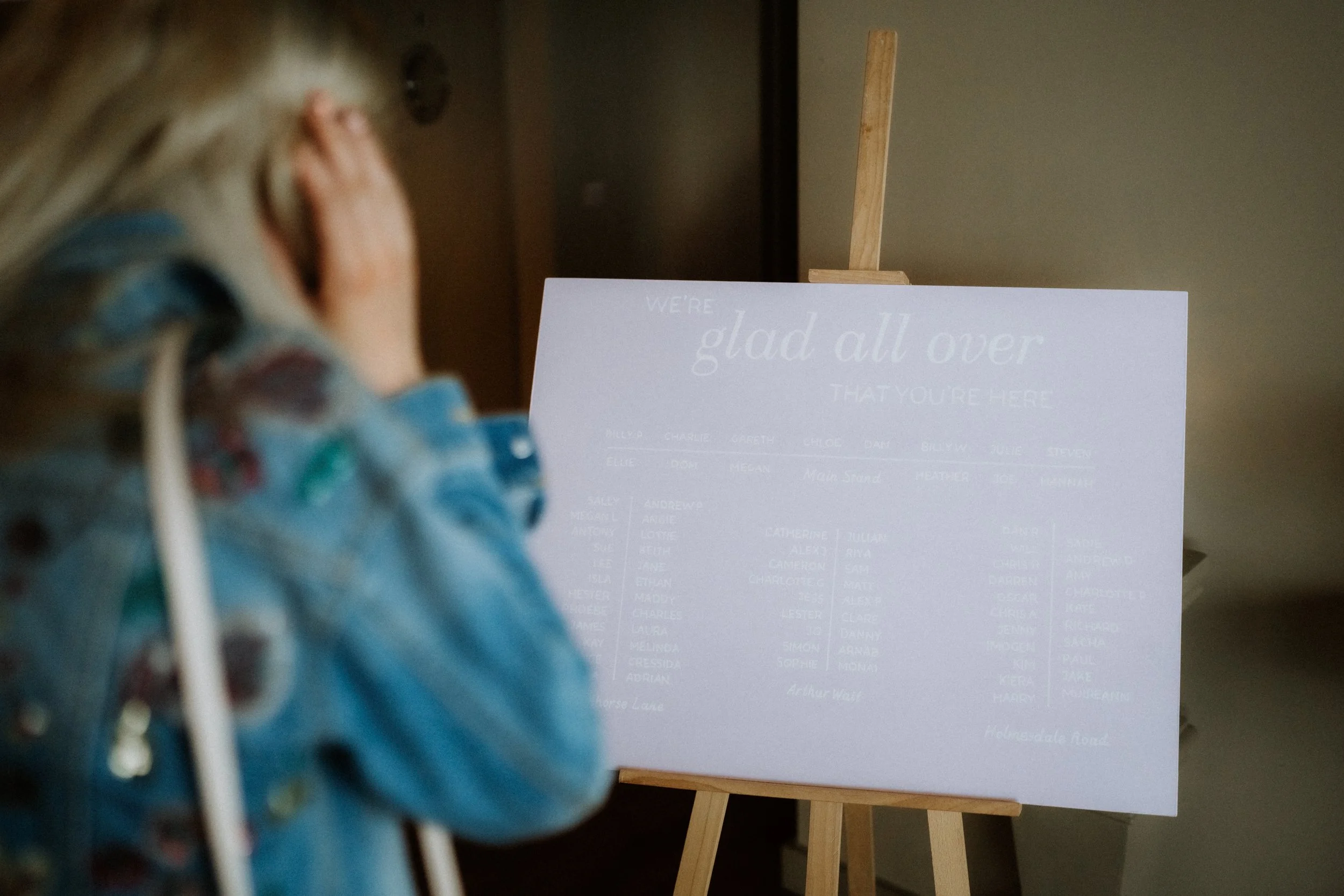
My point is… don’t just have a welcome sign for the sake of having a welcome sign. Guests already know whose wedding they are attending and that they are welcome because… you invited them! Choose signage that adds something, not signage that fills space.
Photo by @wychwoodweddings
3. Highlight the details you do not want missed
Signage is a great way to draw attention to the thoughtful details you have spent time choosing.
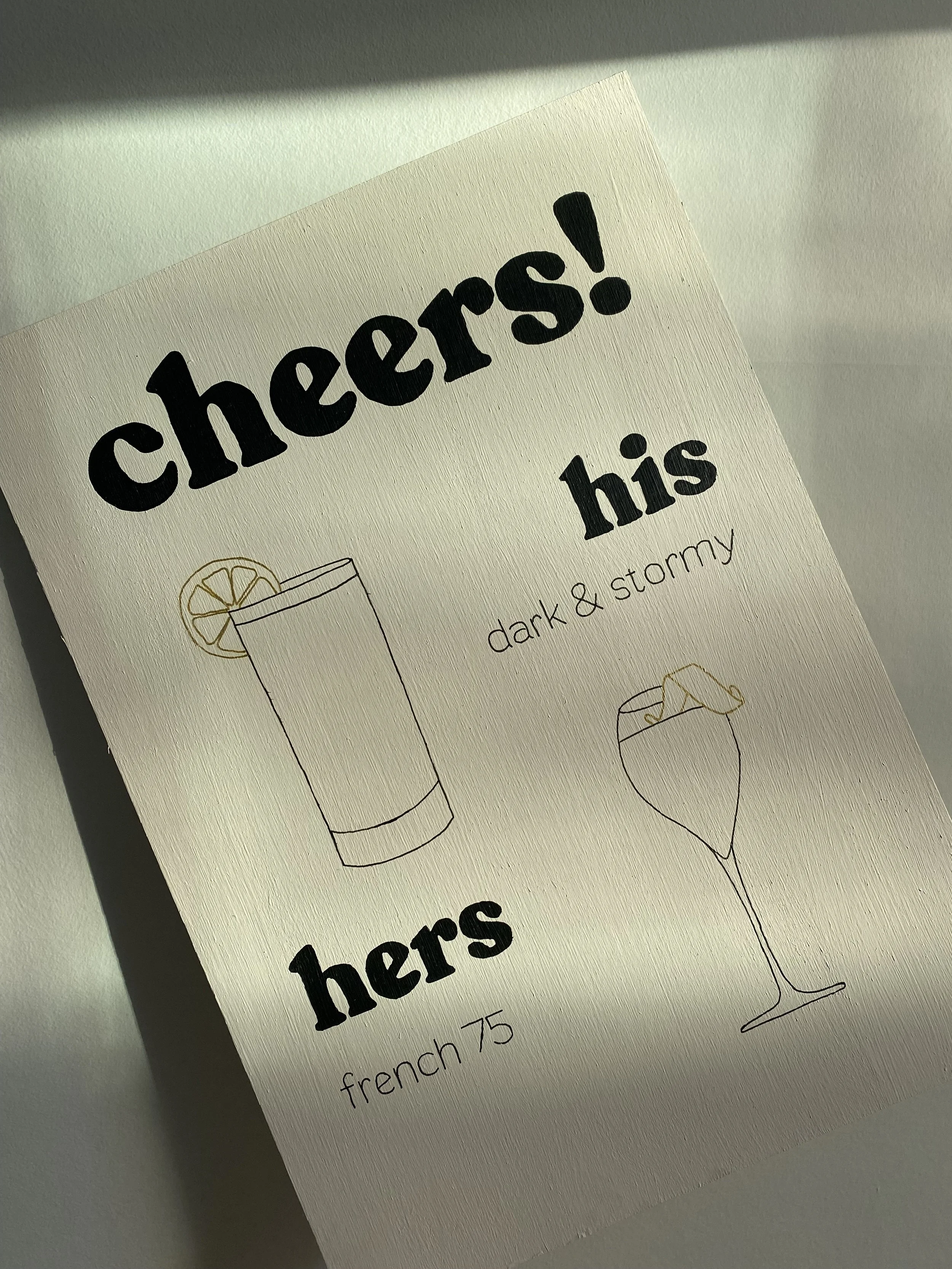
If you have created personalised cocktails, a bar menu helps guests understand what they are ordering and why it matters.
If you have chosen a special guestbook, a small prompt can encourage more meaningful messages.
After a drink or two, people often appreciate a little guidance! Simple prompts like ‘share your best marriage advice’ or ‘tell us your favourite moment from the day’ can make a big difference to what gets said or written.
Used well, signage acts like a quiet guide, helping guests notice the details you care about most.
4. Let your signs reflect you
One of the biggest advantages of custom signage is that it does not have to follow a template. Your signs can reflect your personalities, your story and your style as a couple.
Think about meaningful places, song lyrics, in jokes, shared hobbies, or how you met. These can all be woven into wording, colour choices, and illustrations. The result is signage that feels personal rather than off the shelf. Something your guests won’t see at any other wedding because it’s so YOU.
5. Think about what happens after the day
It is always worth thinking about what will happen to your signage once the wedding is over. Some pieces can be designed to live on afterwards.
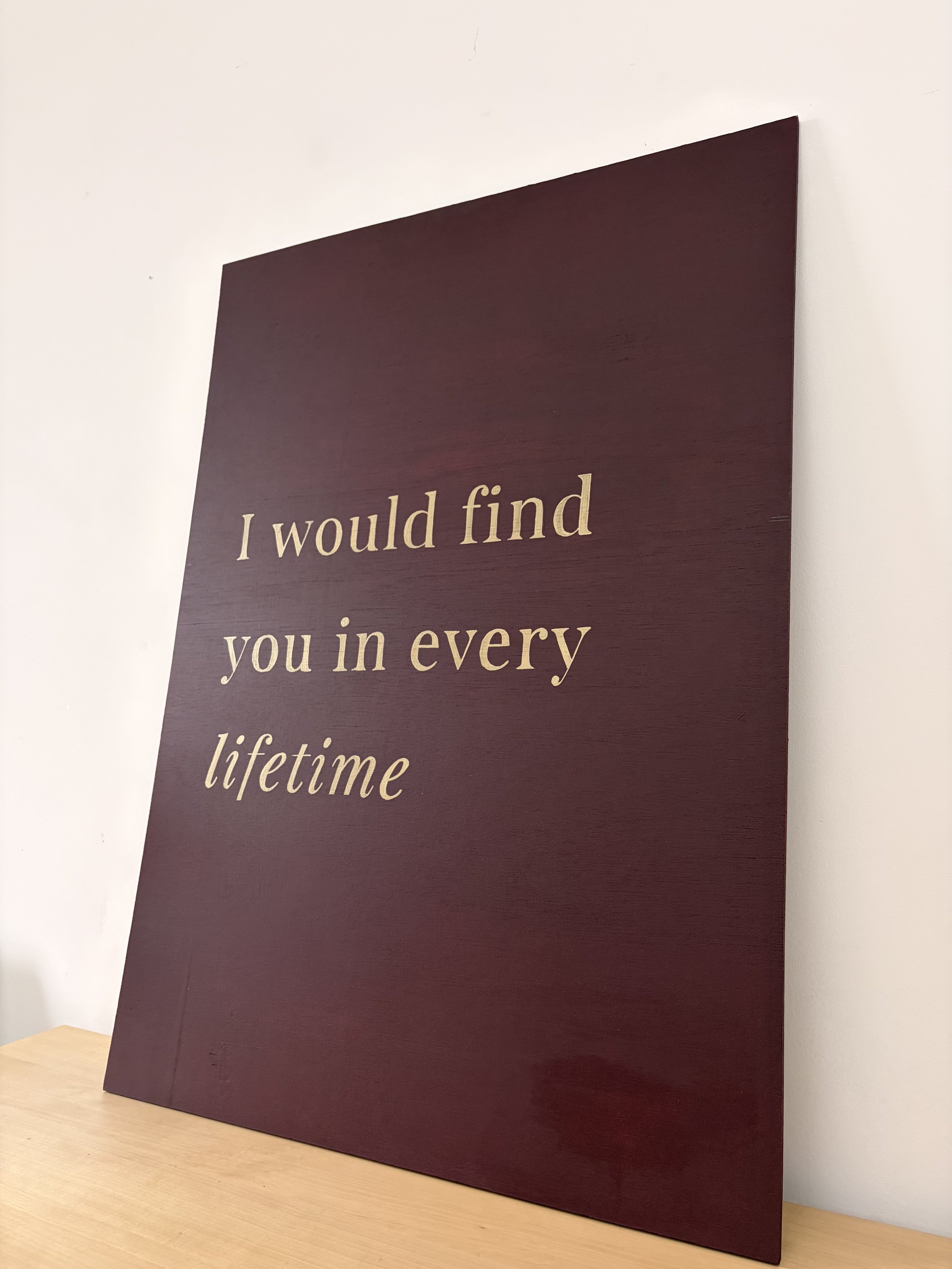
A welcome sign can become artwork for your home. Table numbers can feature illustrations of places you have travelled together and later be framed.
You probably will not want to keep everything, and that is completely fine. That is why I offer a recycling service for any of my wooden signs you choose not to keep, so nothing goes to waste!
Good signage is not about having more. It is about choosing well and choosing meaningfully.